Measures to Prevent Recurrence
-
Reforms to Ensure We Never Repeat the Same Mistake
The needs of our customers and society are continually evolving in response to changes in the times and the environment.Companies must accurately assess these external conditions and maintain a mindset of continuous self-transformation.We viewed the construction defects problem as a serious management challenge and have conducted a fundamental review of the organizational structure and decision-making processes that contribute to it. This was not merely a temporary fix, but an effort to reexamine the very nature of our business.
We have concluded that we should foster an "employee-centered" culture. We have been moving away from a traditional top-down management style toward a bottom-up organization in which each employee thinks and acts independently, top-down management style toward a bottom-up organization in which each employee thinks and acts independently, driving change while respecting the judgment of frontline employees and local characteristics. We firmly believe that by valuing the perspectives of employees who are closest to our customers and empowering them to lead the transformation, we can become an organization that society will need for the long term.
-

Bunya Miyao, President & CEO
Overview of Recurrence Prevention
We have taken the construction defects problem that was uncovered in April 2018 very seriously. Building on the lessons learned from that experience, we have formulated a three-pillar plan to prevent recurrence and have been steadily implementing them. Although the measures to prevent recurrence were completed in fiscal year 2022 as originally planned, we now move beyond simply marking them as completed and work to ensure they are continuously implemented as part of each department's daily operations and become deeply ingrained in our organizational culture.
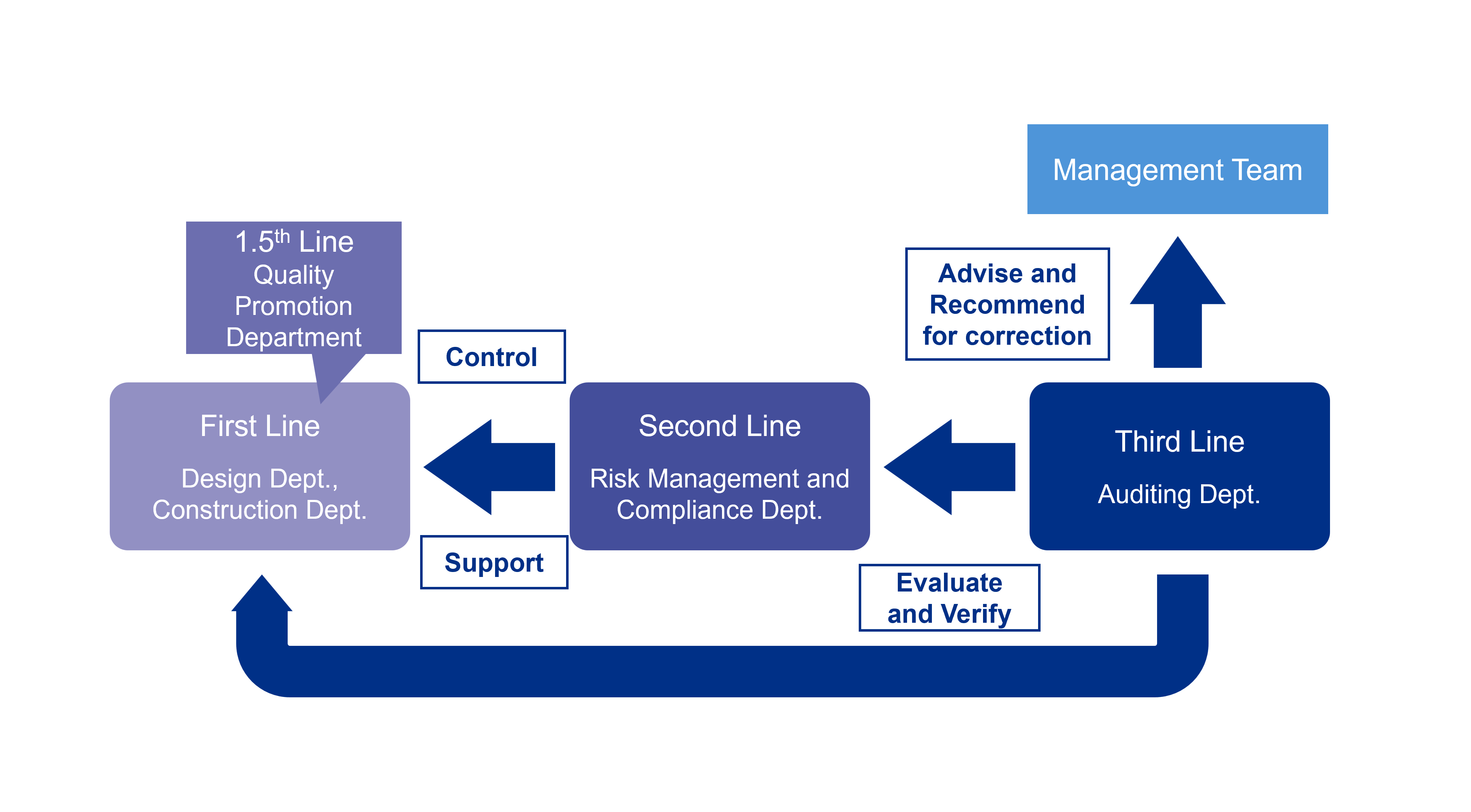
We have been advancing a three-pillar approach that involves reforming our governance structure, strengthening our management framework, and restructuring our construction business management framework. Through our company's unique framework of Four Lines of Defense--comprising First Line, 1.5th Line, Second Line, and Third Line--we aim to balance disciplined, transparent organizational governance with sustainable growth of the business. We will also continue to pursue continuous improvement by establishing a system that ensures the PDCA cycle operates seamlessly at every level of the organization.
The Three Pillars of Recurrence Pevention
1. Governance Reform / Reform of the Corporate Culture
We have been undertaking efforts to fundamentally restore the integrity and transparency of our organization.
- (1) We fundamentally reviewed the composition and nomination process of the Board of Directors and carried out a major
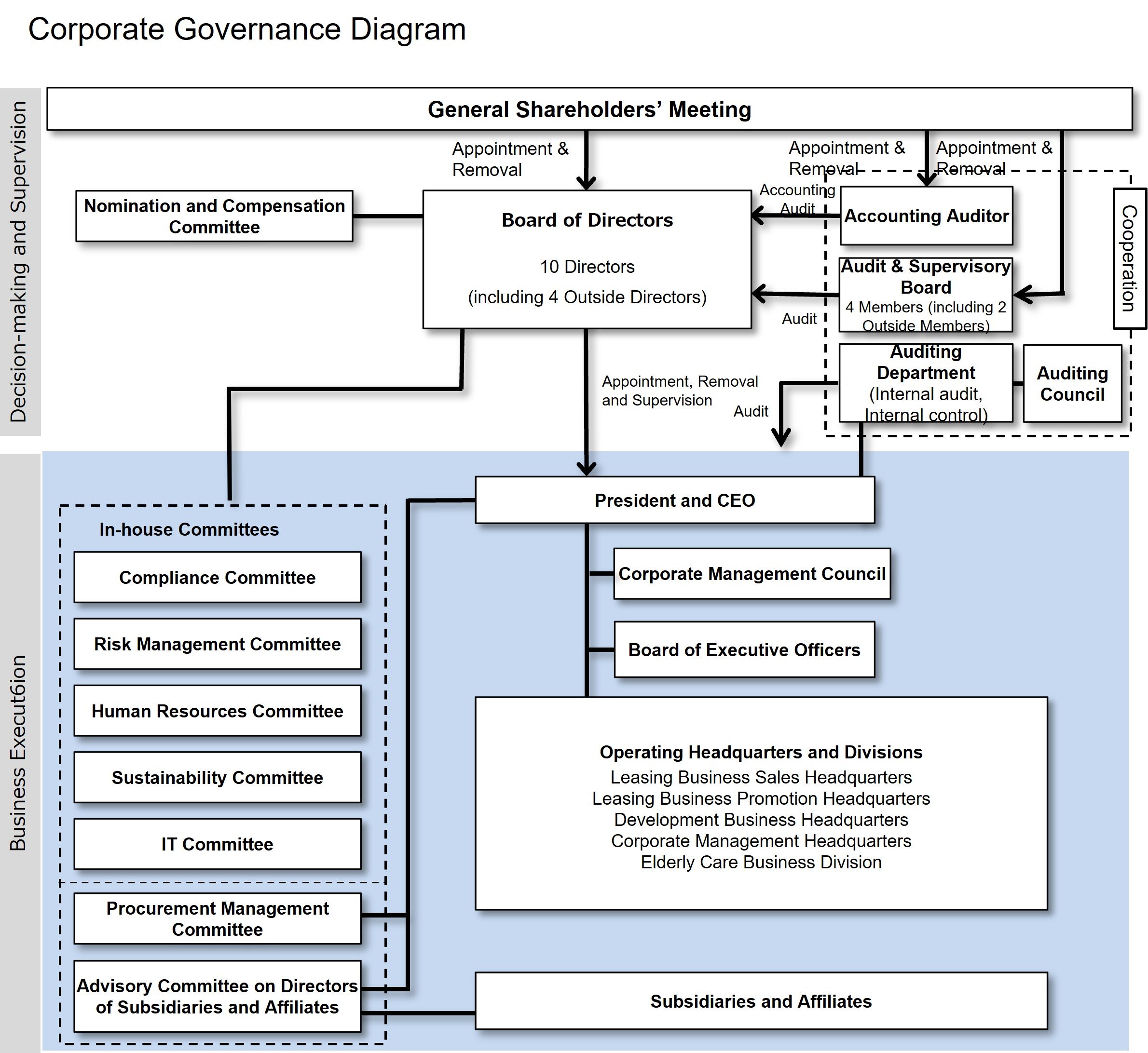
- (2) We established a Nomination and Compensation Committee led by outside directors to rebuild a robust governance structure that enhances transparency and independence.
- (3) Under the new management structure, we hold town hall meetings and engage in two-way communication with property owners to drive reforms in our corporate culture.
1. Governance Reform / Reform of the Corporate Culture
Governance Reform
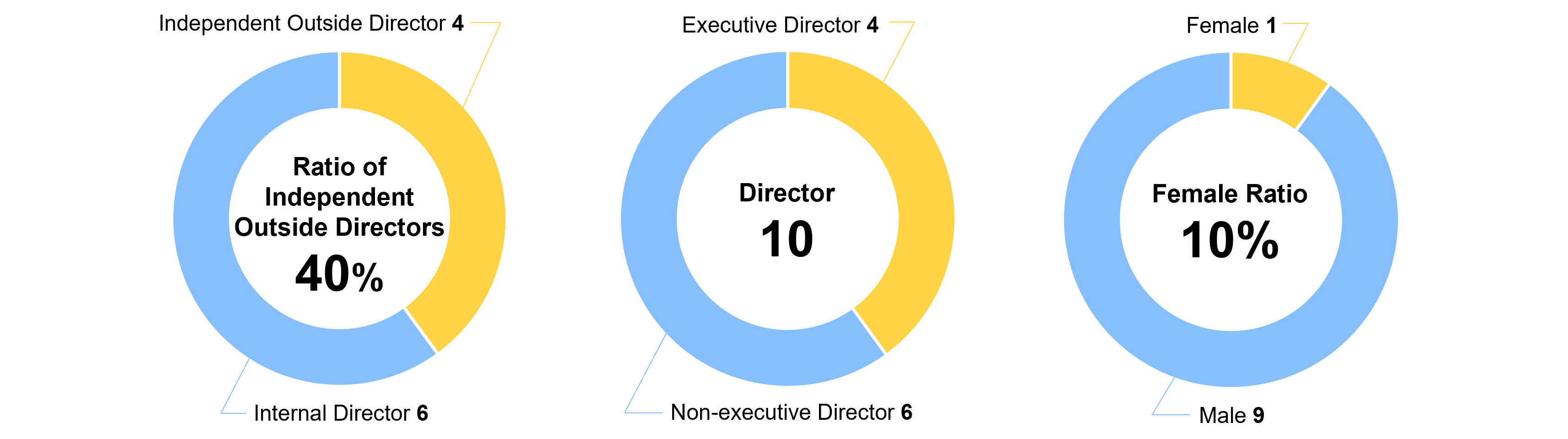
- To further strengthen the supervisory function of the management,we have appointed four independent outside directors, representing more than one-third of the Board. In light of lessons learned from the construction defects problem, the structure of executive directors was also reviewed, and the number was streamlined from eight to four in 2019.
- The Nomination and Compensation Committee has been established, with a majority of its members composed of independent outside directors.
Composition of the Board of Directors
Corporate Governance System
Reform of the Corporate Culture
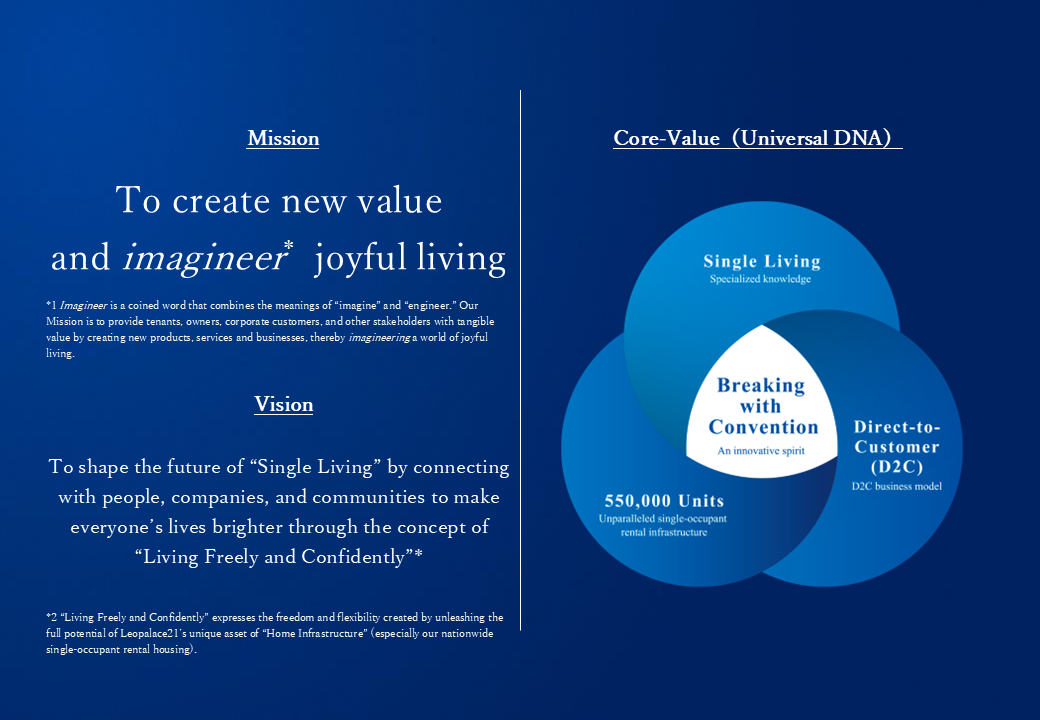
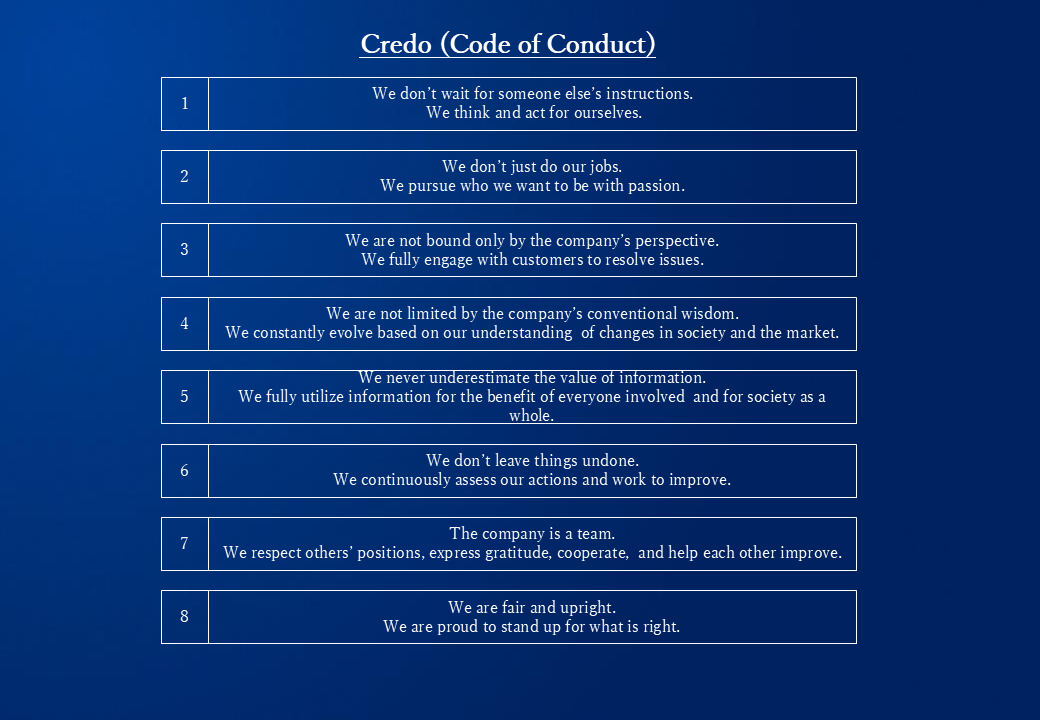
- In order to rebuild our brand, which was damaged by the construction defects problem, we have established a new corporate philosophy system comprising Mission, Vision, Value, and Credo.
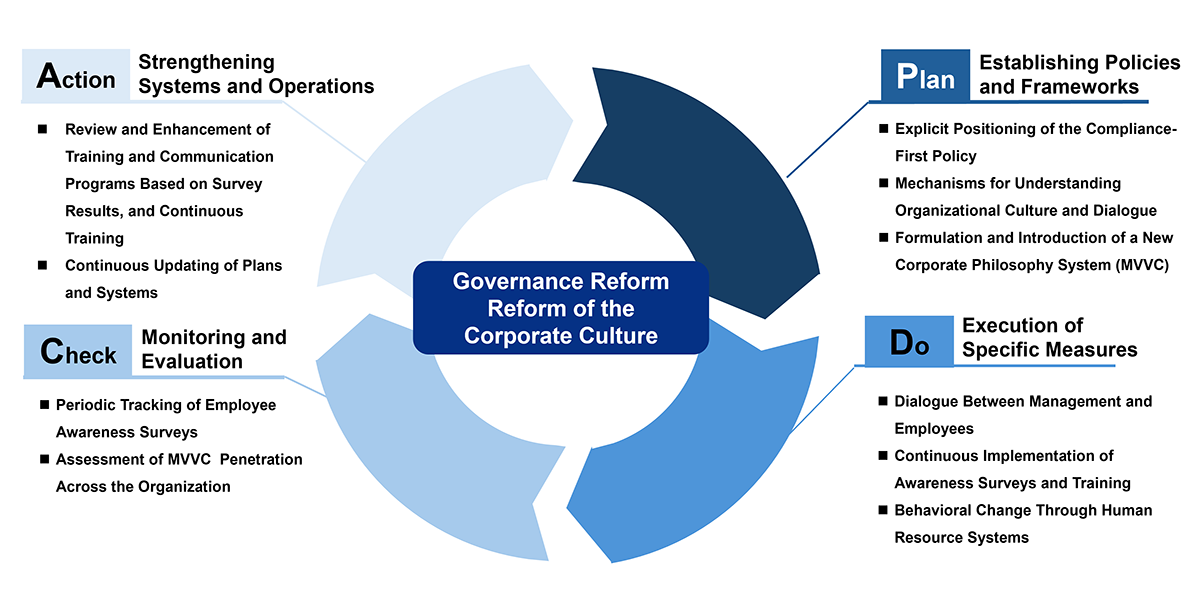
- To promote compliance, we are committed to strengthening awareness and enhancing knowledge acquisition for each and every officer and employee.
In addition, with the aim of fostering a compliance-first mindset among all officers and employees, we continuously implement compliance promotion training, as well as mechanisms within our appraisal system to evaluate compliance promotion initiatives and actions.
Corporate Philosophy System
Compliance-related training and awareness activities in FY2025
| Details | Target | No. of times |
|---|---|---|
| E-learning for understanding the basics and importance of compliance, and Compliance First | Career hires |
Any time |
The basics and importance of compliance, and our company's compliance structure |
New graduate hires |
Once |
Harassment prevention training |
New graduate hires |
Once |
Recurrence prevention survey |
All officers and employees |
Once |
Sexual harassment prevention video training and E-learning |
All officers and employees |
Once |
Business division-specific compliance training |
Relevent business division employees |
Four times |
Compliance awareness survey |
All officers and employees |
Twice |
Harassment fact-finding survey |
All officers and employees |
Twice |
Hotline-related survey |
All officers and employees |
Twice |
PDCA
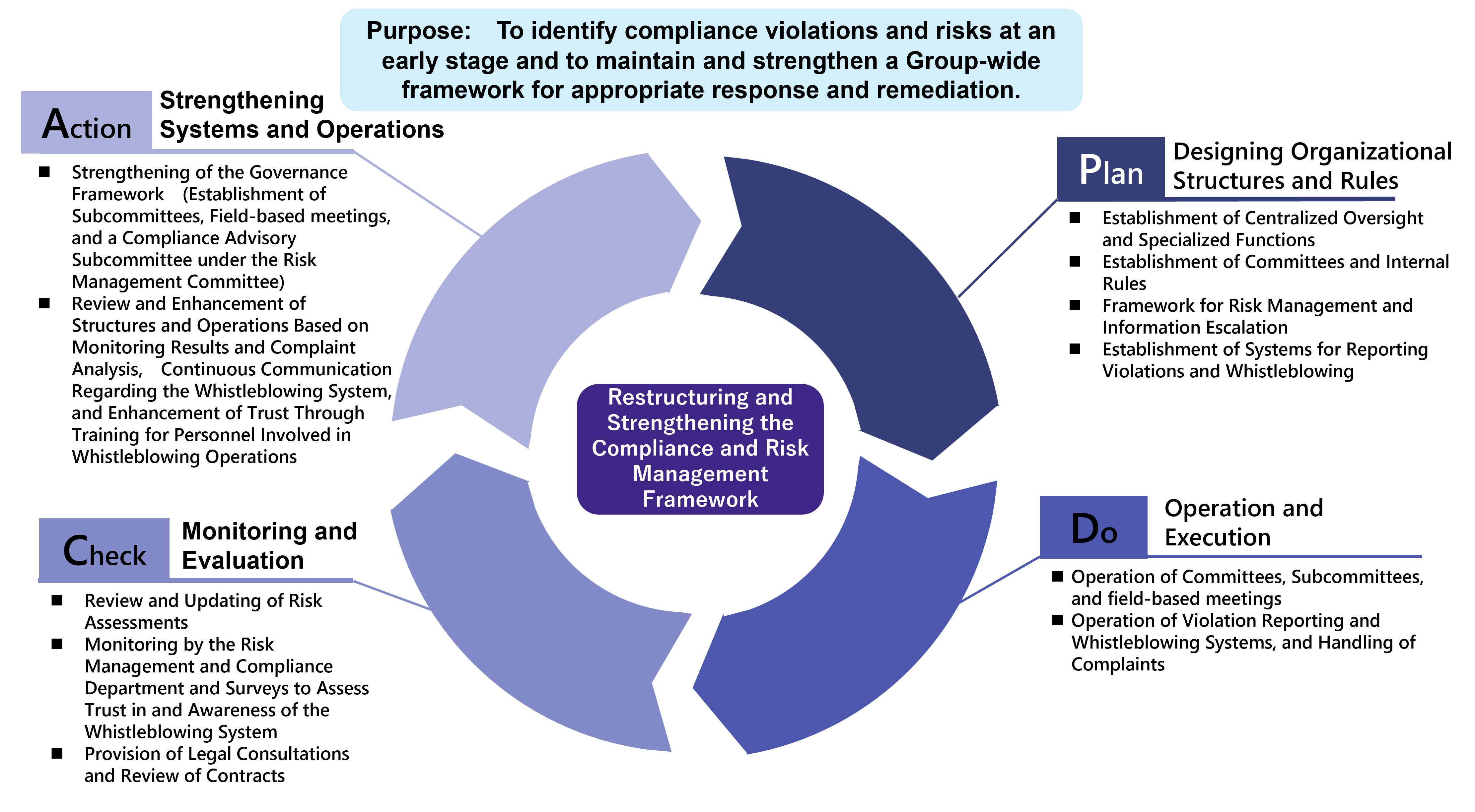
2. Restructuring and Strengthening the Compliance and Risk Management Framework
Although we completed the implementation of measures to prevent recurrence in fiscal year 2022, we continue to review our compliance and risk management framework as outlined below.
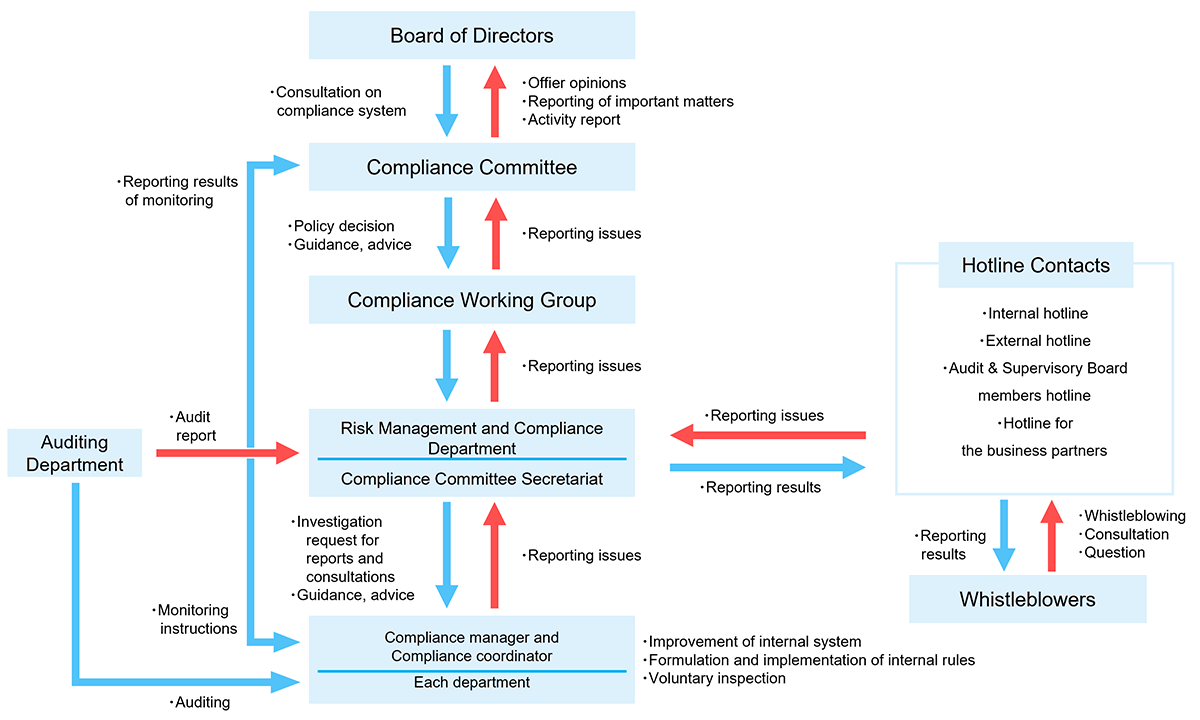
- (1) Compliance Committee
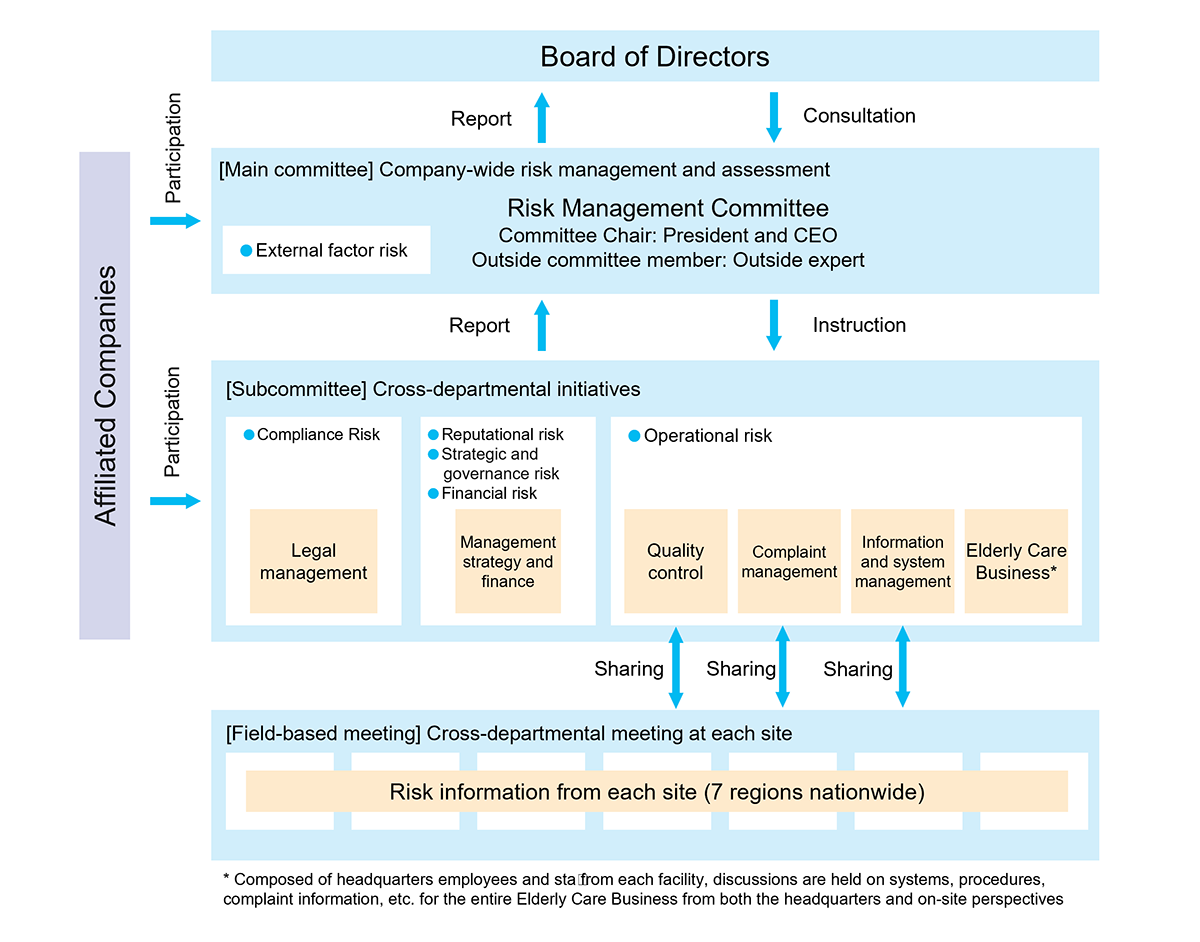
- (2) Risk Management Committee
2. Restructuring and Strengthening the
Compliance and Risk Management Framework
Restructuring and Strengthening the Management Framework
- To ensure effective and timely responses to compliance-related issues, we operate a Compliance Committee as a central forum for deliberation on potential compliance risks (compliance risk management), preventive measures to mitigate such risks (strategic initiatives), and the allocation of necessary resources.
Within the Compliance Conference Subcommittee, discussions on individual cases are conducted with a strong focus on specialized expertise. The Compliance Committee further strengthens oversight by closely monitoring the effectiveness of implemented measures. - As subcommittees of the Risk Management Committee, we have established six specialized committees, each responsible for defining key risk areas and conducting risk assessments and discussions on materialized incidents from a professional standpoint.
In addition, we have newly established cross-functional, site-based meetings across seven regions nationwide. These forums share information with the subcommittees to ensure the prompt horizontal dissemination of information on high-risk events, including incidents, accidents, and customer complaints, throughout the organization.
PDCA
3. Restructuring and Consolidating the Quality Management Systems
To uphold safety, assurance, and reliability in our construction business, we fundamentally reviewed our operational management system and strengthened our field-based quality assurance mechanisms.
- (1) Role of Quality Promotion Department (1.5th Line)
- (2) Operational Improvements Based on The Quality Control Manual
- (3) Clarification of Quality Standards
- (4) Strengthening Inspection and Supervision Systems
- (5) Enhancing Quality Control Through Digital Transformation
3. Restructuring and Consolidating the Quality
Management Systems
(1) Role of Quality Promotion Department (1.5th Line)
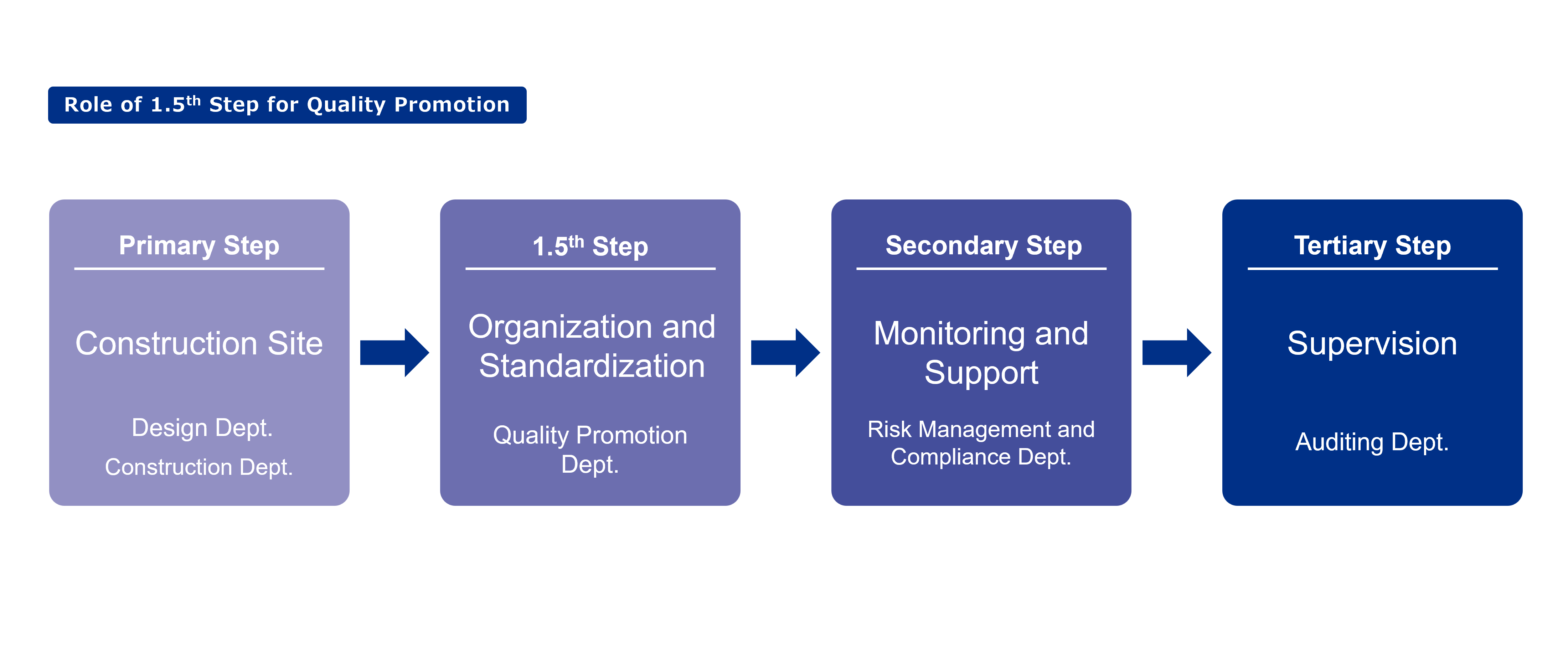
We position the Quality Promotion Department as the 1.5th Line within our Quality Management System.
In addition to on-site verification at each process stage, the Quality Promotion Department serves as a cross-functional linkbetween the construction site (First Line), the Risk Management and Compliance Department (Second Line), and the Auditing Department (Third Line), and consolidates the issues and risk information identified at each process stage.
(2) Operational Improvements Based on The Quality Control Manual
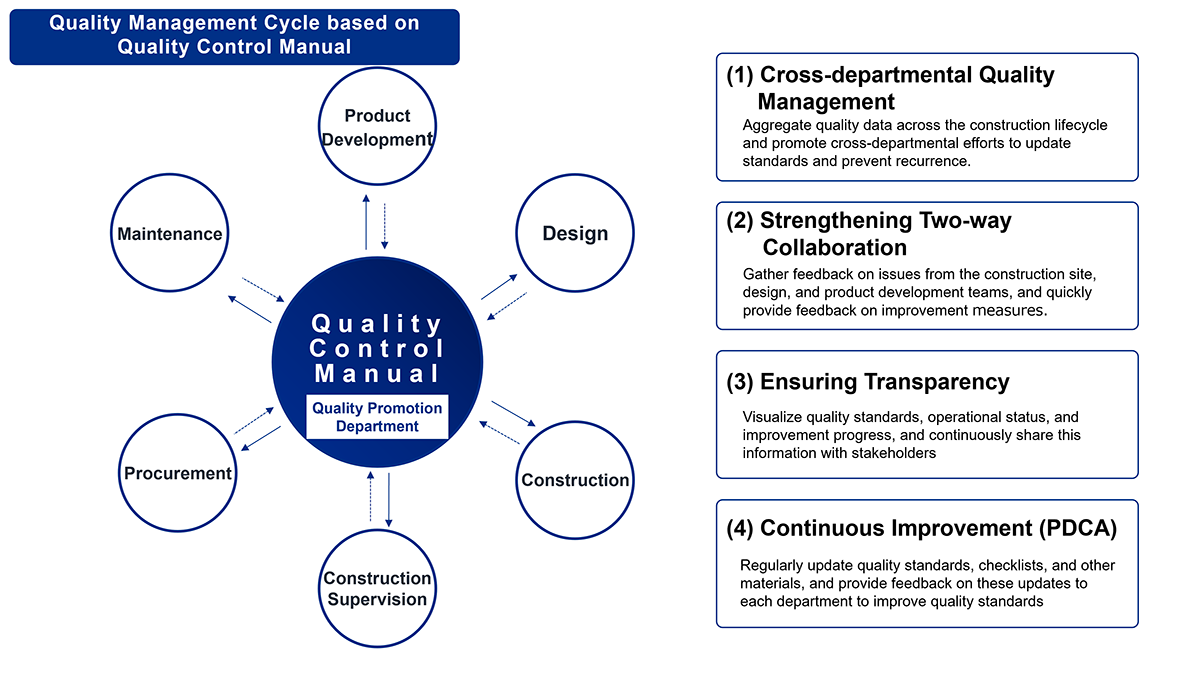
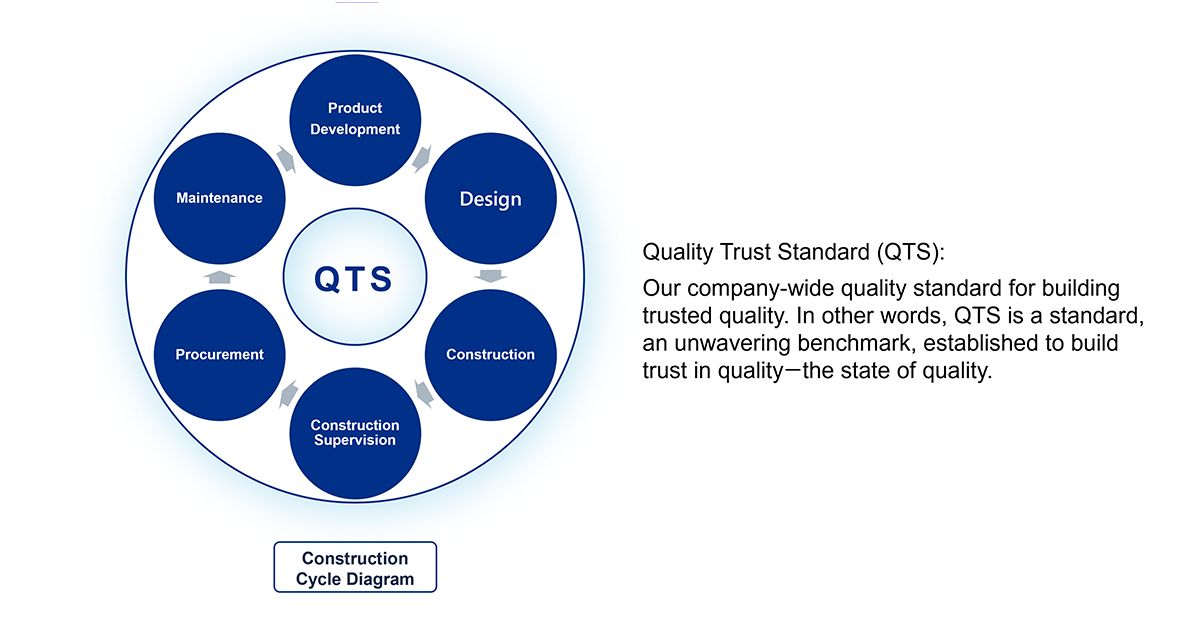
Based on the Quality Control Manual, we define what needs to be verified, who makes decisions and provides approval, and where records (audit trails) are maintained for each stage of the process--including product development, design, onstruction, construction supervision, procurement, and maintenance--and incorporate these into standard operating procedures.
(3) Clarification of Quality Standards
-
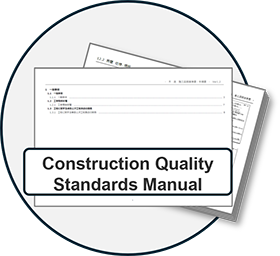
To minimize variations in quality caused by differences in construction site conditions and person in charge, we have established a Construction Quality Standards Manual developed under external expert's supervision.
As a practical standards tailored to the specific conditions of each construction site, the manual serves three distinct roles that differ from conventional design documents.◆Three Key Features of the Construction Quality Standards Manual
01_ Independence from design documents/02_Clarifying evaluation criteria/03_ Common rules for construction sites
◆Seven items listed
01_Construction standards/02_Construction procedures/03_Material specifications/04_Tolerance/05_Construction details/06_Inspection criteria/07_Scope
-
(4) Strengthening Inspection and Supervision Systems
Our standard operating procedure involves a triple-check system conducted by the construction companies, site staffs, and construction supervisors, as well as gate-based approval for the next process. For critical processes, we also incorporate inspections by third-party inspection agencies, and the Risk Management and Compliance Department (Second Line) continuously monitors these operations through process audits.
Furthermore, the Quality Promotion Department (1.5th Line) conducts preemptive monitoring (prior to commencement and before process transitions) based on key management items and a list of potential issues. If a problem is identified, the department becomes involved from the initial response through to the final decision in accordance with the major incident response procedure.
◆Quality control process involving multiple layers of checks
◆Quality and Safety Management System for Construction Projects
- Implement the triple-check system
- Implement the process audits
- Adopt third-party inspections and client site verifications
- Implement the construction supervision guidelines/Revise standard procedures
(5) Enhancing Quality Control Through Digital Transformation
To ensure construction quality, we are promoting the digitization of inspections and records, making construction-site information transparent and enabling the rapid sharing of corrective actions. Furthermore, by integrating various digital technologies into our business processes, we manage construction-site verification, documentation, corrective actions, and recurrence prevention as a single workflow. This allows us to centrally manage revised versions of construction quality standards, inspection checklists, and operational rules, ensuring that updates are reliably communicated. As a result, we minimize discrepancies in human judgment and communication, maintaining consistent construction quality.
◆Adopting the cloud-based construction management app
We have adopted the cloud-based construction management app to streamline construction management and improve quality. We centrally manage photos taken at the construction sites, inspection records, schedules, reports, and various communications in the cloud, creating an environment where all stakeholders can always access the latest information.
Quality Management: Overview and Operating Model
◆We have restructured our quality management system to ensure safety, assurance, and reliability across the entire lifecycle--from design through construction to maintenance.
Following our efforts to correct and prevent the recurrence of construction defects, we have resumed construction contracting and have designated quality management as a top priority for the entire company. Quality is not merely about preventing defects; it is a critical business asset that safeguards brand value, underpins profitability, and provides the foundation for business sustainability. Our mission is to build a Quality Management System that maximizes customer satisfaction involving the frontline activities. To achieve this, we have established the Quality Management System (QMP/QTS/QT) based on safety, assurance, and reliability in April 2026.
- (1) Make The Quality Trust Standard (QTS) as Internal Benchmark for All Related Processes
- (2) PDCA Centered on The Quality Trust Standard (QTS)
- (3) Quality Management Throughout the Entire Construction Cycle
◆Quality Management System
QMP(Quality Management Policy)
Operate systems to ensure safety, assurance, and reliability
QTS(Quality Trust Standard)
Become a company that continues to be chosen for its quality and reliability
QT(Quality Theme)
Information・Decision/Prevention・Control/Impremention・Assurance/Improvement・Training
Future Initiatives and Our Roadmap
Although we completed the initial phase of our recurrence prevention measures in fiscal year 2022, we do not view completion as the end goal. Rather, we are using this initiative as a starting point to integrate continuous improvement activities into our daily operations and ensure they become firmly established.
Furthermore, by ensuring that the PDCA cycle continues to function seamlessly at every level of the organization, we will drive progress on two fronts: improving the quality of our operations and transforming our corporate culture.
|
Done by 2022 |
Current Operation |
Future Course of Action |
|---|---|---|---|
(1)Governance Reform / Reform of the Corporate Culture |
|
|
|
| (2) Restructuring and Strengthening the Compliance and Risk Management Framework |
|
|
|
(3)Restructuring and Consolidating the Quality Management Systems |
|
|
|
Outline of construction defects problem
SERVICE SITES
-
- Clicking the links above will take you to the home page of each site.